Read to the end and the title will make sense. I promise :)
The author Amy Krouse Rosenthal earlier this year at the age
of 51 due to cancer. I had never heard of Amy until about two weeks before she
died yet I felt a tremendous sadness at her passing. From what I’ve heard of
her though, she was a woman who made the world a little brighter.
It turns out that Amy was a children’s author, which is what surprises me because I spent the past two years swallowing all children’s books I could lay my hands on. Somehow none of her books ever crossed my path. I heard about her because of an essay she wrote for the New York Times in which she wrote an imaginary dating profile for her husband, who was going to have to keep living once she passed away. Amy’s love and tenderness poured out from every word on the page. Despite the cancer and medication that were both eating away at her ability to form coherent sentences, she wrote with a poignancy I can only hope for in my own writing. Through her words, I could see she was a woman of incredible strength, love and passion.
 But this essay, while among my favorite pieces of writing,
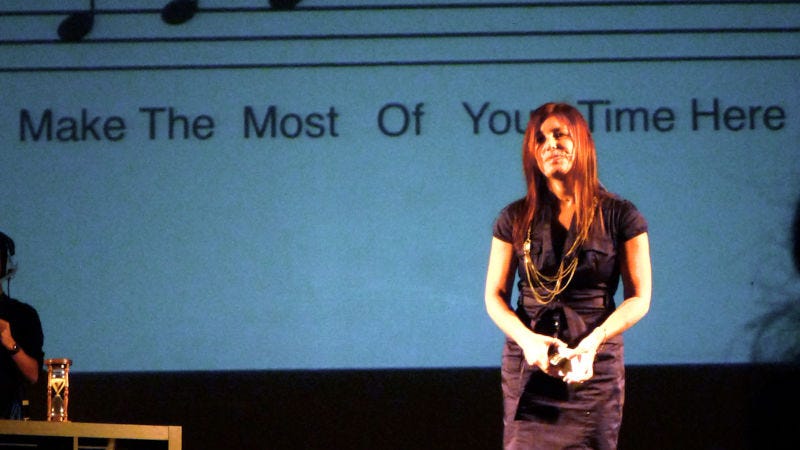
is not the part about Amy that struck me most. Amy gave a TED talk that I found
while reading her obituary. The talk is about the “seven notes of life” as she
calls them. They are broad statements about how to view the life you are
living. As far as TED Talks go, it might not be the most revolutionary. I am
not left feeling I can be a better human being after watching it or that I have
a better understanding of how the world works.
But this essay, while among my favorite pieces of writing,
is not the part about Amy that struck me most. Amy gave a TED talk that I found
while reading her obituary. The talk is about the “seven notes of life” as she
calls them. They are broad statements about how to view the life you are
living. As far as TED Talks go, it might not be the most revolutionary. I am
not left feeling I can be a better human being after watching it or that I have
a better understanding of how the world works.
I wondered, then, what the value of the TED Talk was. Since
coming to Finland, I have found myself increasingly judging the worth of things
based on how much knowledge, ideas or competencies they have. Our classes are
all focused on research and scientific inquiry. I have begun to feel that every
comment we make in class needs to be based on research or have some kind of
analytical contribution to the discussion.
Amy’s talk was not analytical. The ideas she brought up were
loosely connected, sometimes dubiously so, and many were broad ideas that I
have heard so many times before that they sound like platitudes at this point.
As I listened though, it dawned on me that not everything in life is about
contributing in such an academic way. Amy’s talk was full of hope and joy. She
talked about appreciating the little things, like finding a book that matches
the title of her presentation, or appreciating that the word “OK” when turned
on its side looks like a person. She also talked about “beckoning the lovely”
because what you look for, you will eventually find.
Her talk was like her children’s books. Perhaps simplistic
in its message but there was beauty in the message. Children’s books teach the
youngest humans on the planet about what is important in the world. They are
simple in their message and their power lies in this simplicity. Deep thinking
is important but it is also important to appreciate the little things. Like the
squirrel eating acorns in the backyard, the colors of the sunset reflecting off
the water, or the way a child thinks that she is going to visit downtown
England.
I am going to strive to keep this balance. In my classes I
will try to think critically and scientifically. But I will also try to
appreciate the world around me. This includes the differences in ways of
people’s thinking. Some are naturally inclined toward the scientific, some
naturally toward the small moments. Both are important views in creating a
loving world. In a class I took in college on writing creative non-fiction, we had
to write short pieces on the smallest moment we possible could. It’s these
small moments, after all, that together make up a life time.
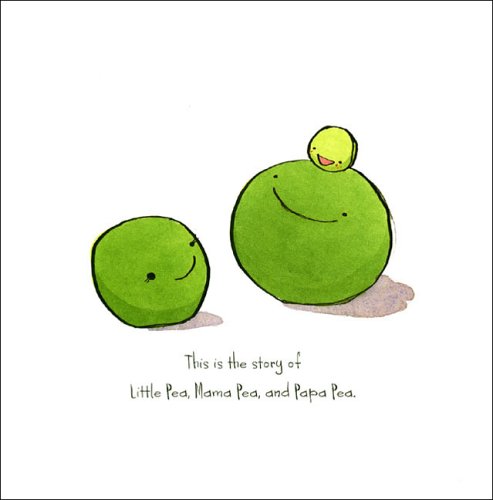 As a side note, I recommend reading Amy’s books. After
listening to the talk I had to go and find one of her picture books to read (Which I listened to on youtube). I
found one about a little pea who doesn’t want to eat his candy but eventually
forces it down when tempted with a big bowl of his favorite dessert: spinach. It’s
adorable for its whimsical fantasy. And yet despite the fantasy every child can
relate to it.
As a side note, I recommend reading Amy’s books. After
listening to the talk I had to go and find one of her picture books to read (Which I listened to on youtube). I
found one about a little pea who doesn’t want to eat his candy but eventually
forces it down when tempted with a big bowl of his favorite dessert: spinach. It’s
adorable for its whimsical fantasy. And yet despite the fantasy every child can
relate to it.
Comments
Post a Comment